Introduction
Artificial Intelligence, often abbreviated as AI, has become one of the most influential technologies of the modern era. From smartphones and search engines to healthcare systems and smart agriculture, AI is increasingly shaping how people interact with technology in their daily lives. Despite its growing presence, the concept of artificial intelligence is often misunderstood or oversimplified. This article provides a clear and accessible explanation of what artificial intelligence is, how it works, and why it matters today.
Understanding Artificial Intelligence
Artificial Intelligence refers to a field of computer science focused on designing systems capable of performing tasks that normally require human intelligence. These tasks include learning from experience, reasoning, problem solving, decision making, and understanding language. Rather than following only fixed instructions, AI systems are designed to analyze data, identify patterns, and improve their performance over time.
At its core, artificial intelligence aims to simulate aspects of human cognitive behavior using computational models and algorithms. However, AI does not replicate human intelligence in a biological sense. Instead, it uses mathematical methods and logical processes to achieve intelligent behavior in machines. This distinction is important, as AI systems operate based on data and models rather than emotions or consciousness.
How Artificial Intelligence Works
Artificial intelligence systems rely heavily on data and algorithms. Data serves as the foundation from which AI systems learn, while algorithms define how the system processes that data. One of the most important subfields of AI is machine learning, where systems learn patterns directly from data without being explicitly programmed for every situation.
A more advanced branch, known as deep learning, uses multi-layered neural networks inspired by the structure of the human brain. These models are particularly effective in tasks such as image recognition, speech processing, and natural language understanding. As computational power and data availability have increased, deep learning has significantly accelerated the progress of artificial intelligence.
A Brief Evolution of Artificial Intelligence
The idea of artificial intelligence has existed for decades, with early foundations rooted in philosophy, logic, and mathematics. Formal research in AI began in the mid-twentieth century, when scientists explored whether machines could simulate intelligent behavior. Early AI systems were limited by computational power and data availability, which restricted their practical applications.
In recent years, advancements in hardware, data storage, and learning algorithms have transformed AI from a theoretical concept into a practical technology. Today, artificial intelligence is widely used in real-world systems, demonstrating capabilities that were once considered purely speculative.
Applications of Artificial Intelligence
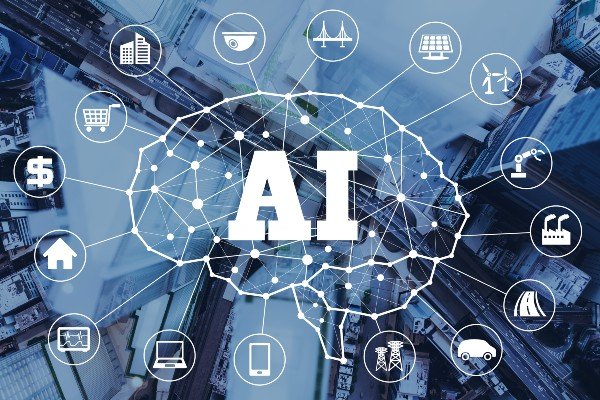
Artificial intelligence is now applied across a wide range of domains. In healthcare, AI systems assist in medical image analysis, disease diagnosis, and treatment planning. In manufacturing, AI improves efficiency through predictive maintenance, quality control, and intelligent automation. In education, AI supports personalized learning experiences and intelligent tutoring systems.
AI is also present in everyday applications such as virtual assistants, recommendation systems, fraud detection, and autonomous vehicles. These examples highlight how artificial intelligence enhances accuracy, speed, and decision-making in complex environments.
Benefits and Challenges of AI
One of the main advantages of artificial intelligence is its ability to process large volumes of data quickly and consistently. AI systems can perform repetitive or complex tasks with high precision, often reducing human error and increasing productivity. They also support data-driven decision making, which can lead to more efficient and informed outcomes.
However, artificial intelligence also presents important challenges. Issues related to data privacy, security, transparency, and ethical use remain significant concerns. Additionally, the increasing automation enabled by AI raises questions about workforce transformation and job displacement. Addressing these challenges requires responsible design, regulation, and collaboration between researchers, policymakers, and society.
Conclusion
Artificial Intelligence is not merely a futuristic concept but a transformative technology already embedded in modern life. By enabling machines to learn, reason, and adapt, AI has opened new possibilities across science, industry, and society. Understanding what artificial intelligence is and how it works is essential for appreciating both its potential and its limitations. As AI continues to evolve, its responsible development will play a crucial role in shaping a sustainable and inclusive technological future.
References
-McCarthy, J. (2007). What is Artificial Intelligence?
-Nilsson, N. J. (2009). The Quest for Artificial Intelligence. Cambridge University Press.
-Buchanan, B. G. (2005). A brief history of artificial intelligence. AI Magazine, 26(4).
-Mahato, R. (2021). Artificial Intelligence: What Is It? Outcomes of Best Practices in Classroom Research.
-Luckin, R., Holmes, W., Griffiths, M., & Forcier, L. (2016). Intelligence Unleashed: An Argument for AI in Education.